Why Your Small Business Needs to Document Its Processes (Before Someone Quits)
Undocumented processes walk out the door with the people who know them. Pick your three most important processes and write them down while the people who run them still work for you. It costs a few hours now and saves you weeks later.
Here's a scene I've watched play out more than once. Your best employee, the one who handles invoicing or scheduling or that one weird export nobody else understands, gives two weeks notice. Everyone says congratulations and means it. Then about ten days later somebody asks the question that ruins the month: "Wait, how did she actually do that?"
Nobody knows. It was never written down. It lived in her head, and now her head works somewhere else.
What does losing tribal knowledge actually cost?
Real money, not hypothetical money. Replacing an employee typically runs $10,000 to $30,000 once you add up recruiting, interviews, and the months where the new person is slow and everyone else is covering. Now add the part nobody budgets for: rediscovering how the job was done. The new hire isn't learning your process. They're reinventing it, badly, one mistake at a time. Customers notice. Invoices go out late or wrong. Things that "always just happened" stop happening.
I spent years in large print production, and the pattern was the same at every scale. The operations that survived turnover were the ones where the process outlived the person. The ones that panicked every time someone left were the ones running on memory.
What does "documentation" actually mean?
Not a 200-page operations manual. Nobody writes those and nobody reads them. Documentation, in practice, is a clear set of steps for the ten things that matter most in your business. Written so that a smart person who has never done the task could follow along and get it right.
A good process doc answers four questions:
- When does this happen? (the trigger)
- What are the exact steps, in order?
- What does "done" look like?
- What goes wrong, and what do you do when it does?
That last one is where the real gold is. Every experienced employee carries a mental list of exceptions. The customer who needs their invoice formatted a certain way. The vendor portal that errors out unless you use the old link. That knowledge is invisible until the day it's gone.
How do you start without drowning in it?
Start with three. Not thirty. Pick the three processes that would hurt the most if the person who owns them disappeared tomorrow. For most small businesses that's something like getting paid, handling a new customer, and delivering the core product or service.
Then write them down step by step. Screenshots help. A recorded screen share with a quick walkthrough works too, as long as somebody turns it into written steps afterward. Put the docs somewhere everyone can find them. A shared drive folder called "How We Do Things" beats a fancy system nobody opens.
One more rule: the person who does the task should not be the only reviewer. Have someone else follow the doc cold. Every step they stumble on is a gap.
The part nobody tells you about
The payoff isn't just insurance against someone quitting. Documented processes compound. Onboarding gets faster because new people train themselves. Mistakes drop because the steps stop drifting. And you personally stop being the bottleneck, because "ask Mike" stops being the answer to everything.
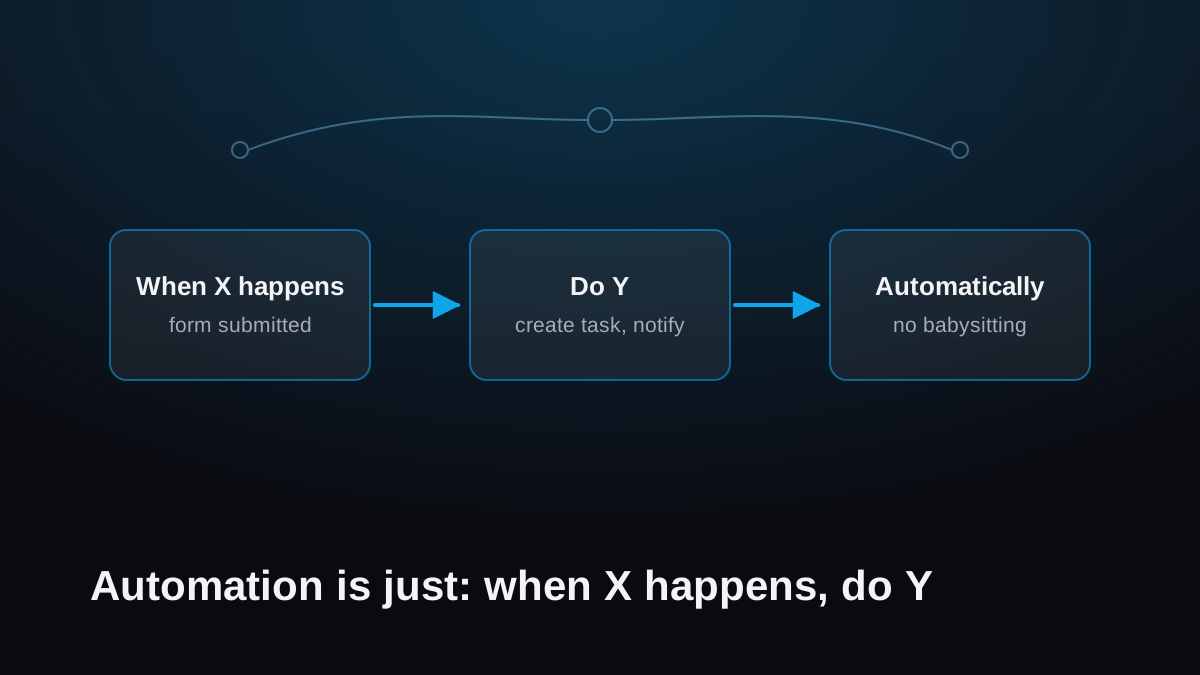
Documentation is also the foundation for everything that comes after it. You can't automate a process you can't describe. Written steps are the blueprint automation gets built from.
This is a big part of what we do at MKM Logic: we sit with the people who hold the knowledge, pull it out of their heads, and turn it into documentation your business actually uses. But honestly, even if you never hire anyone for this, do it yourself. Pick three processes this week and write them down. Future you will be grateful.